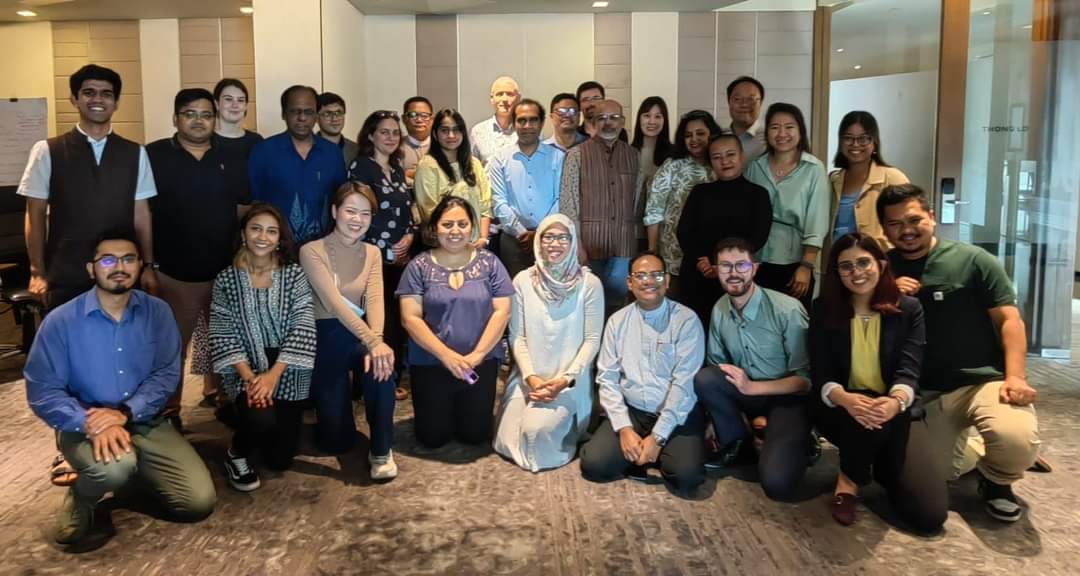
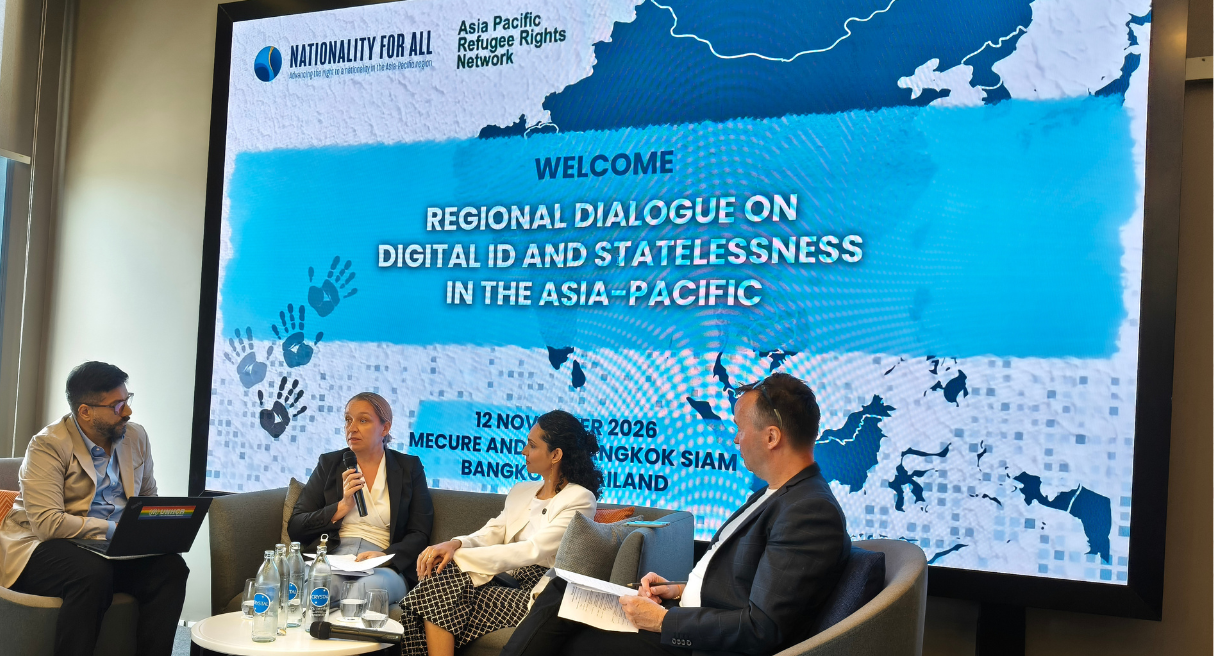
Nationality For All (NFA) and the Asia Pacific Refugee Rights Network (APRRN) co-organized a regional dialogue Digital ID and Statelessness in the Asia-Pacific in Bangkok: What does inclusion look like in practice, on the 12th of November 2026.
Across Asia-Pacific, digital ID systems are expanding at different speeds and increasingly connect people to social services such as healthcare, banking and social protection. Many depend on existing identity documents or civil and population registers. For stateless people and others whose identity or whose residence is not officially documented, digitization can therefore reproduce barriers to enrolment and make exclusion from services harder to escape.
The third edition of the Statelessness Encyclopedia Asia Pacific (SEAP III) examines digital ID across five subregions. Its regional analysis highlights four concerns:
- Documentation requirements can exclude people who cannot establish eligibility through existing records.
- Digital ID may become necessary in practice to access services, even where participation is formally voluntary.
- Legal protections, data governance and avenues for complaints vary substantially across countries.
- There is little publicly documented evidence of systematic consultation with statelessness, minority-rights and discrimination specialists during system development.
These findings invite closer scrutiny of who benefits from digital transformation, whose exclusion becomes embedded in new systems, and how affected communities can shape decisions. Regional variation also makes context-specific responses essential.
The dialogue brought together affected-community representatives, civil society, UN agencies, government, embassies, development partners, researchers and practitioners. Participants identified a practical change, who helped deliver it and how affected communities would judge its success.