
NFA Participates in the Regional Workshop on Operationalizing the Panoramic/Route-Based Approach in Asia and the Pacific
27–28 November 2025 | Bangkok, Thailand
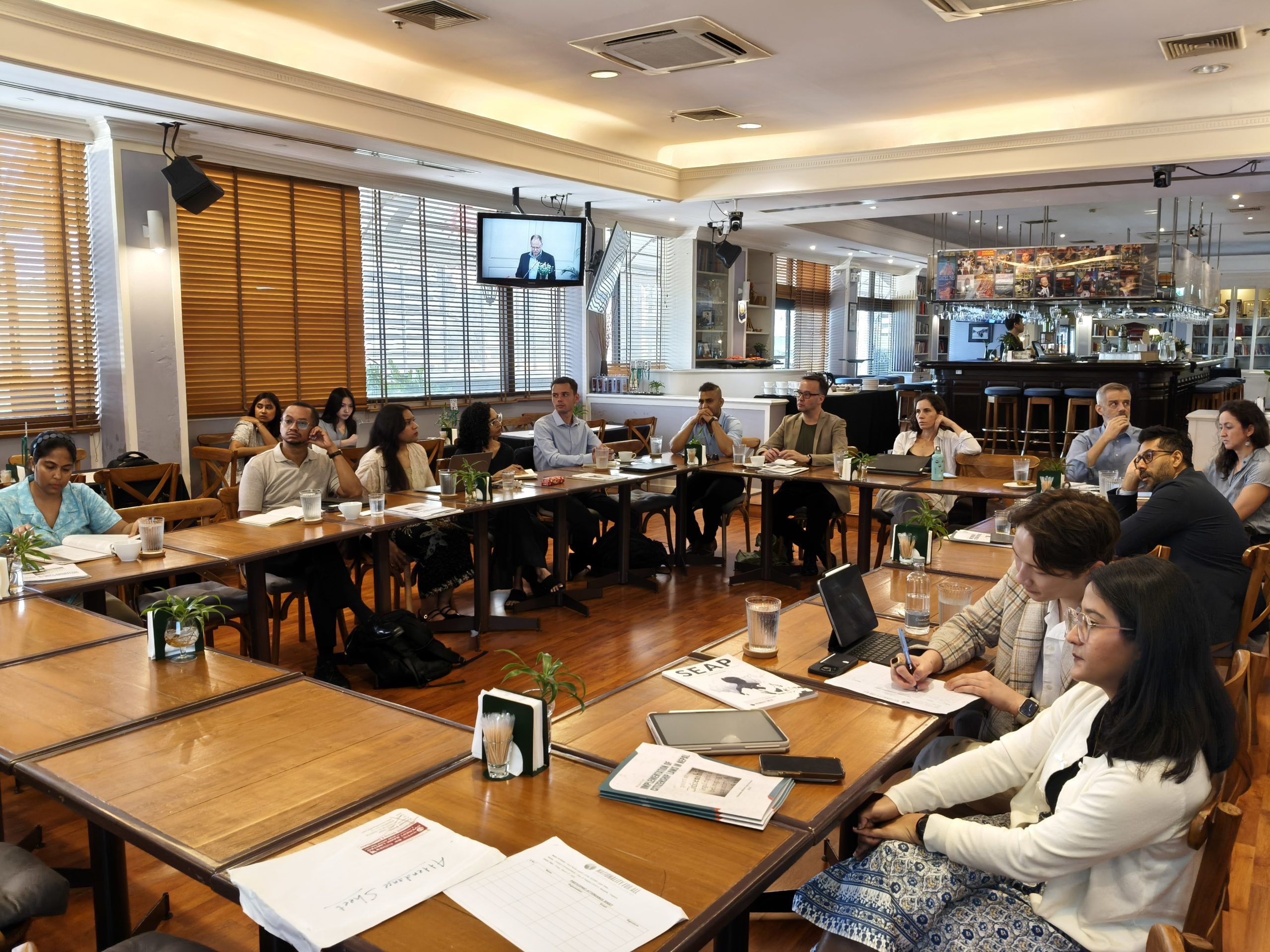
Nationality for All (NFA) participated in the Regional Workshop on the Operationalization of the Panoramic/Route-Based Approach (PA/RBA) held from 27–28 November 2025 in Bangkok, Thailand. The workshop, organized by UNHCR’s Regional Bureau for Asia and the Pacific brought together UN agencies, international and national NGOs, civil society networks, academic experts, and refugee- and migrant-led organizations to collectively advance a more coherent, protection-sensitive approach to displacement along key regional mobility routes.
Representing NFA, Program Coordinator Krishna Deoja joined the two-day hybrid meeting, contributing perspectives on statelessness reduction, cross-border protection pathways, and the importance of inclusive regional coordination.
About the Workshop
The Panoramic/Route-Based Approach (PA/RBA) is a strategic framework designed to address protection needs across the full displacement journey, acknowledging that people on the move face evolving risks from points of origin to transit and destination countries. The workshop built on the outcomes of the 2025 UNHCR Regional Consultations with NGOs and served as a dedicated space to translate strategic commitments into practical, field-level collaboration.
Over two days, participants examined protection challenges along two major displacement routes:
- South and South-East Asia (SSEA) Route, encompassing mixed movements from Myanmar and Bangladesh throughout mainland and insular Southeast Asia, India, and beyond
- South-West Asia (SWA) Route, covering movements from Afghanistan through Pakistan and Iran toward other parts of Asia and Europe
These routes are characterized by complex, dynamic displacement patterns—driven by conflict, persecution, statelessness, economic hardship, and shrinking legal pathways—highlighting the need for regionally aligned, multi-stakeholder action.
Workshop Objectives
As outlined in the official Concept Note, the workshop aimed to:
- Foster a shared strategic vision of the PA/RBA among stakeholders working along the SSEA and SWA routes.
- Explore practical, collaborative approaches to operationalize protection and solutions for refugees, stateless persons, and migrants across their journeys.
- Identify inter-agency coordination modalities to support complementary, coherent programming across the region.
Key Sessions and Discussions
Over two days, participants engaged in structured discussions, group exercises, and plenary exchanges based on a detailed agenda.
Day 1 Highlights
- Opening Session: Introduced the purpose, expected outcomes, and key concepts of the PA/RBA, followed by a tour de table.
- Session 1 – Perspectives on Scaling a Comprehensive Approach: Stakeholders examined conceptual clarity, regional relevance, challenges, and gaps in operationalizing the PA/RBA.
- Session 2 – Regional Mobility & Protection Trends: Presentations on SSEA and SWA route dynamics, risks, vulnerabilities, and service gaps, followed by a route risk-mapping exercise.
- Session 3 – Case Studies & Good Practices: Organizations shared practical experiences in mobile outreach, community-based monitoring, cross-border collaboration, and trafficking prevention.
- Session 4 – Deep Dive into Pillars 1–3: Group work on:
- Protection-sensitive entry and admission
- Strengthening asylum and rights-based migration systems
- Immediate protection, assistance, trafficking, and smuggling
- Session 5 – Plenary: Toward Joint Action: Consolidation of recommendations and identification of cross-route operationalization opportunities.
Day 2 Highlights
- Session 6 – Deep Dive into Pillars 4–6: Group exercises focused on inclusion and development, safe and regular pathways, and dignified return and reintegration.
- Session 7 – Plenary: Joint Action for Pillars 4–6
- Session 8 – Coordination Framework: Discussion on regional coordination modalities, global practices, and harmonization needs.
- Session 9 – Coordination Deliverables & Next Steps: Prioritization of joint outputs, including information management, communications, advocacy, and resource mobilization, culminating in agreed recommendations for 2026 action planning.
Participation and Representation
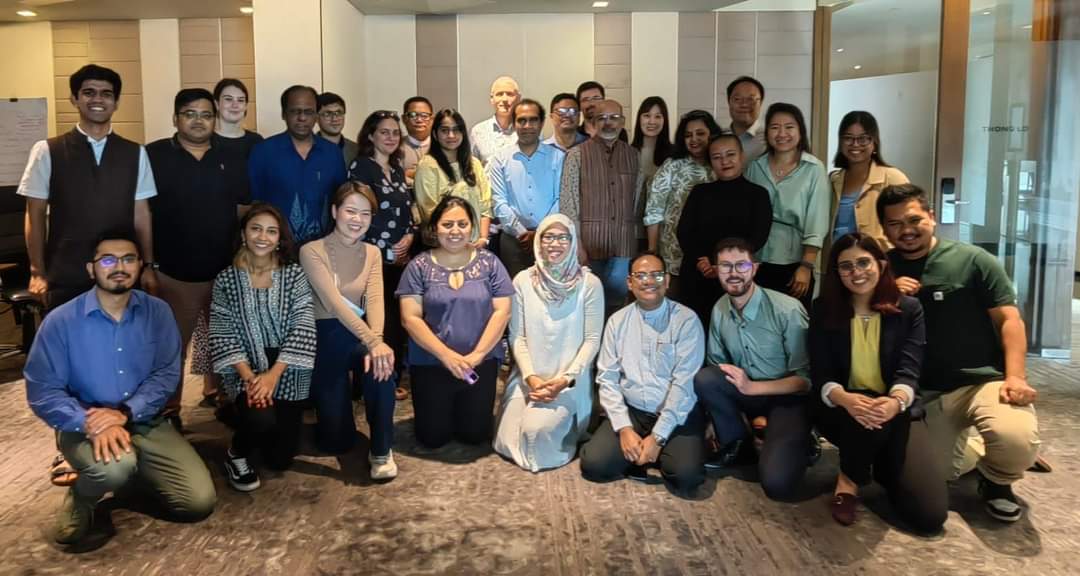
The workshop brought together over 30 organizations representing humanitarian, development, human rights, academic, and migrant- and refugee-led sectors. NFA was one of the confirmed participants.
Notable participants included:
- UN agencies such as UNHCR, IOM, UNDP, UNICEF EAPRO, and UNODC ROSEAP
- Regional and international NGOs including the Danish Refugee Council, Jesuit Refugee Service, Asia Pacific Refugee Rights Network, Mixed Migration Centre, and others
- Civil society organizations, migrant networks, and academic institutions across Asia and the Pacific
NFA’s participation underscored the organization’s ongoing commitment to advancing statelessness prevention, rights-based policy reform, and inclusive protection systems across transnational contexts.
NFA’s Contribution
During plenary dialogues and group exercises, NFA emphasized:
- The critical role of civil society in strengthening referral pathways and community-based monitoring
- The need to integrate statelessness considerations within all stages of the PA/RBA
- The importance of coordinated data systems and cross-border engagement for early identification of individuals at risk
- Opportunities to enhance regional harmonization of protection-sensitive procedures and advocacy frameworks
These contributions align with the workshop’s broader goals of building collaborative, cross-pillar operational models that respond to evolving realities along major displacement routes.
Key Takeaways
The workshop reaffirmed the importance of:
- Collective and multi-sector action to address the continuum of protection needs from origin to destination
- Predictable, coordinated, and agile responses to emerging mobility patterns
- Strengthened partnerships between UN agencies, NGOs, civil society groups, and refugee- and migrant-led organizations
- Regional coherence, ensuring interventions upstream and downstream reinforce each other across SSEA and SWA routes
Participants also outlined initial milestones and workstreams to guide PA/RBA operationalization efforts into 2026.
Moving Forward
NFA remains committed to contributing to this evolving regional agenda. The workshop served as a vital platform to strengthen collaboration, deepen shared understanding, and position civil society actors—including statelessness-focused organizations like NFA—as integral partners in shaping a more humane, principled, and coordinated protection architecture.
We extend our appreciation to UNHCR’s Regional Bureau for Asia and the Pacific for convening this timely and impactful event and look forward to continued engagement with partners across the region.